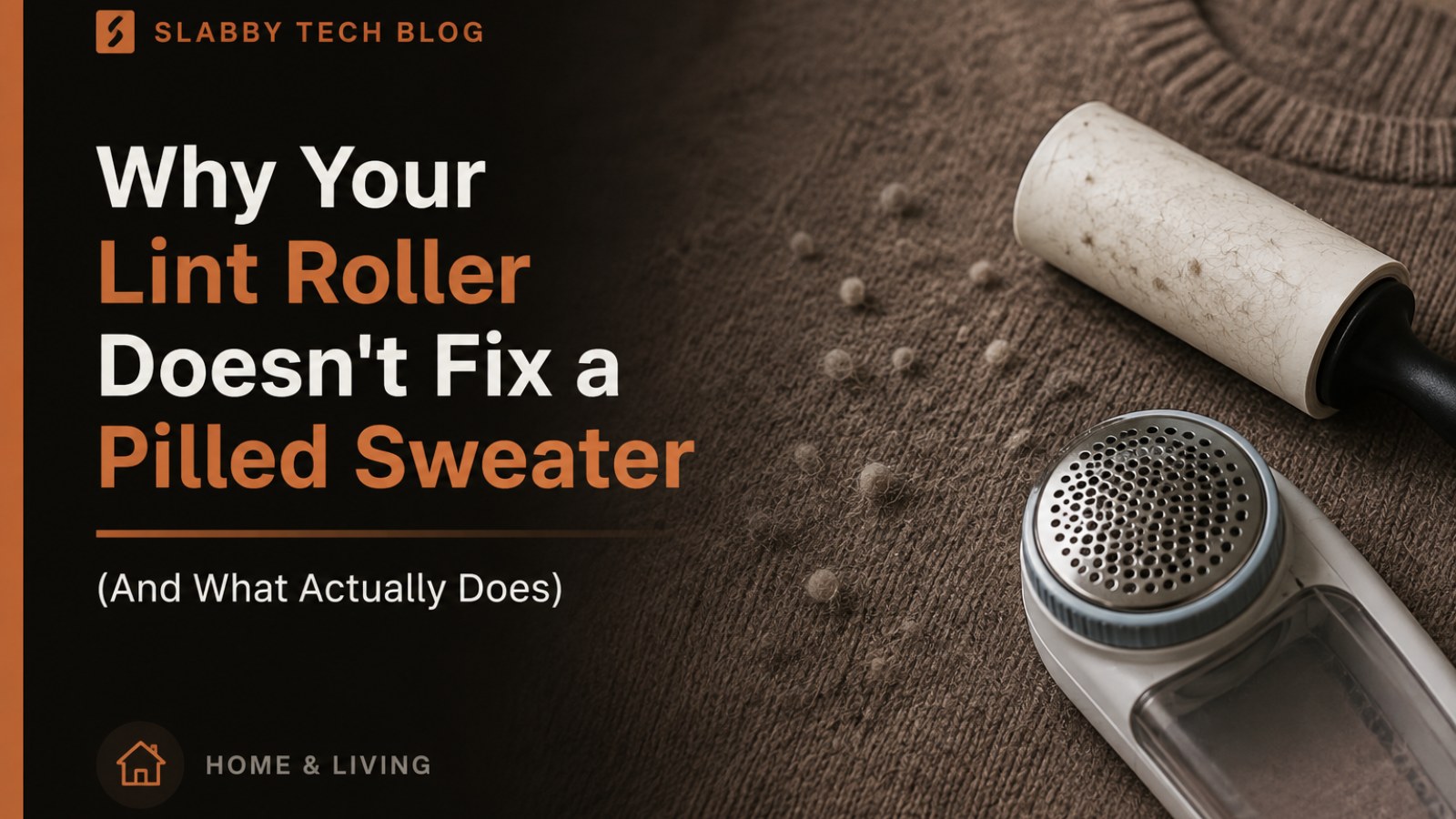
You roll a sticky lint roller over a pilled sweater, and nothing happens. The little fuzzy balls are still there. This isn't a bad roller or a wasted effort — it's the wrong tool for the job, and almost nobody explains why before you're already frustrated with a sweater that looks worse than it should.
Lint and Pilling Are Two Different Problems
Lint is loose fiber, dust, or hair sitting on top of the fabric — it isn't attached to anything, it's just resting there. A sticky roller is built exactly for this: light adhesive picks up loose material sitting on the surface. Pilling is a completely different mechanism. It happens when the fabric's own surface fibers break from friction and then tangle together into small, tight balls that are still physically anchored to the garment. A sticky roller has nothing to grip on a pill, because the pill isn't loose debris — it's the fabric itself, still attached, just in the wrong shape.
What Actually Causes Pilling
Friction is the direct cause. Seat belts, bag straps, sitting against upholstery, the inside of a jacket rubbing against a sweater — any repeated rubbing breaks the shorter fibers on the surface, and those broken fibers tangle into the little balls you see. Fabrics made from shorter fibers — wool, cotton, and polyester in particular — pill more easily than fabrics made from longer fibers, which stay smoother and more resistant to this kind of breakage. This is also why pilling tends to show up first in predictable spots: underarms, where a bag strap sits, the small of your back against a chair.
Where Kathmandu's Dust Fits In (and Where It Doesn't)
Kathmandu's air quality has been genuinely poor — PM2.5 has hit levels many multiples above the WHO safe limit, with construction dust and vehicle exhaust settling on everything, clothes included. That's a real, separate problem: surface dust and grime, which a lint roller or a simple wipe-down handles fine. But dust doesn't cause pilling, and pilling isn't dust — treating a pilled sweater with more lint-rolling doesn't fix it, because you're addressing the wrong layer of the problem entirely.
What Actually Removes Pills
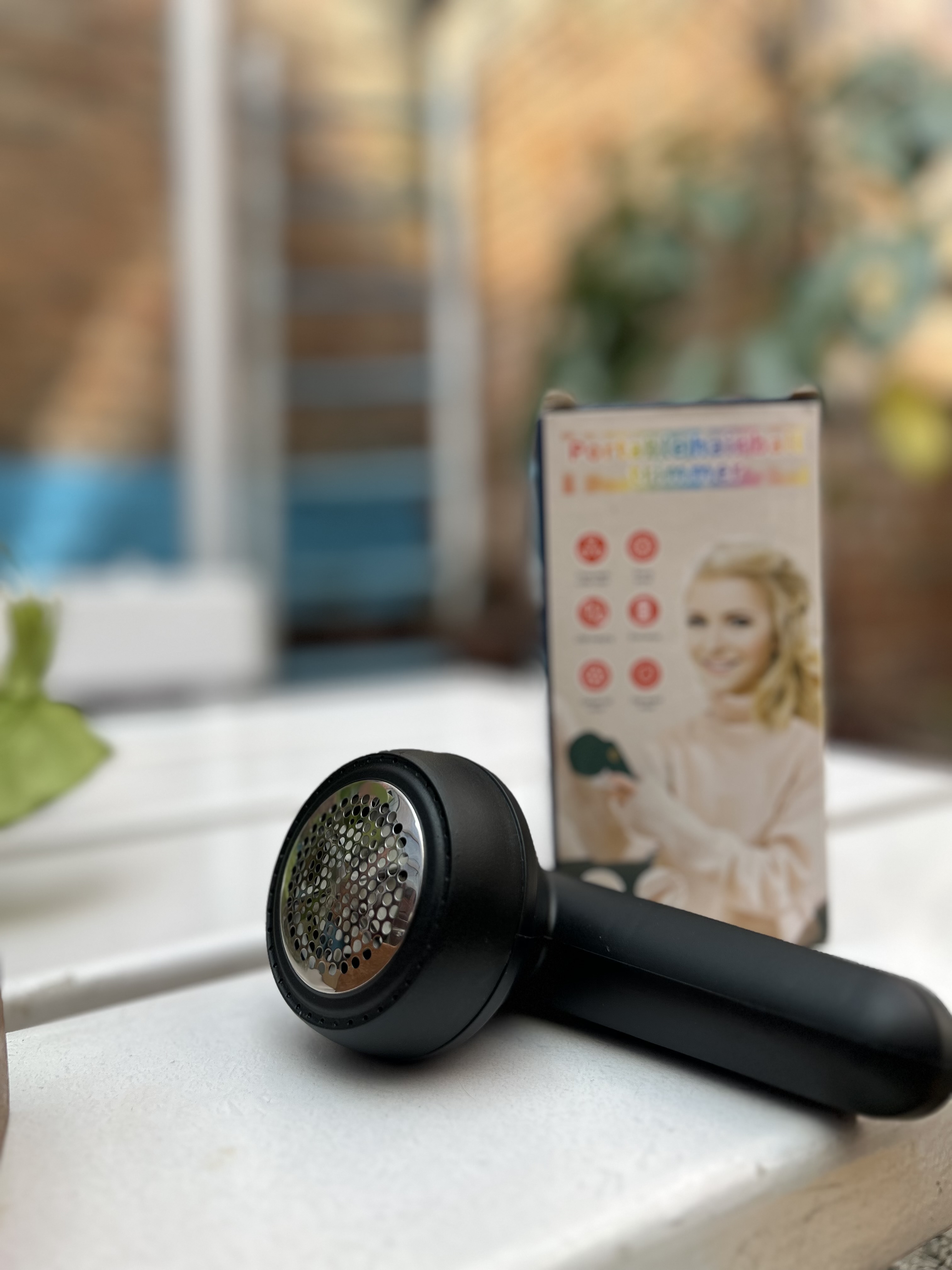
A mechanical fabric shaver — sometimes just called a lint remover, but functionally a small rotating-blade device — works completely differently from a roller. It shaves the raised, tangled pill off the surface of the fabric using a fine blade or mesh guard, without cutting into the base weave underneath. That's the only reliable way to remove pills that are already formed, short of picking each one off by hand.
Reducing Pilling Before It Starts
Turn garments inside out before washing — this puts the friction from the wash cycle on the inside, not the visible outer surface
Wash in cold water on a gentle cycle, and hand-wash wool specifically where possible
Air dry rather than tumble dry — dryer tumbling is a major source of the friction that causes pilling
Avoid tightly packing pill-prone fabrics against rough surfaces (bag straps, upholstery) for long periods
Where It Fits
We sell an electric lint remover / fabric shaver for Rs 750 — the pill-shaving kind, not a sticky roller. Keep a roller for actual surface dust and pet hair, use the shaver for pills that are already there, and you're covering two genuinely different problems instead of expecting one tool to do both.