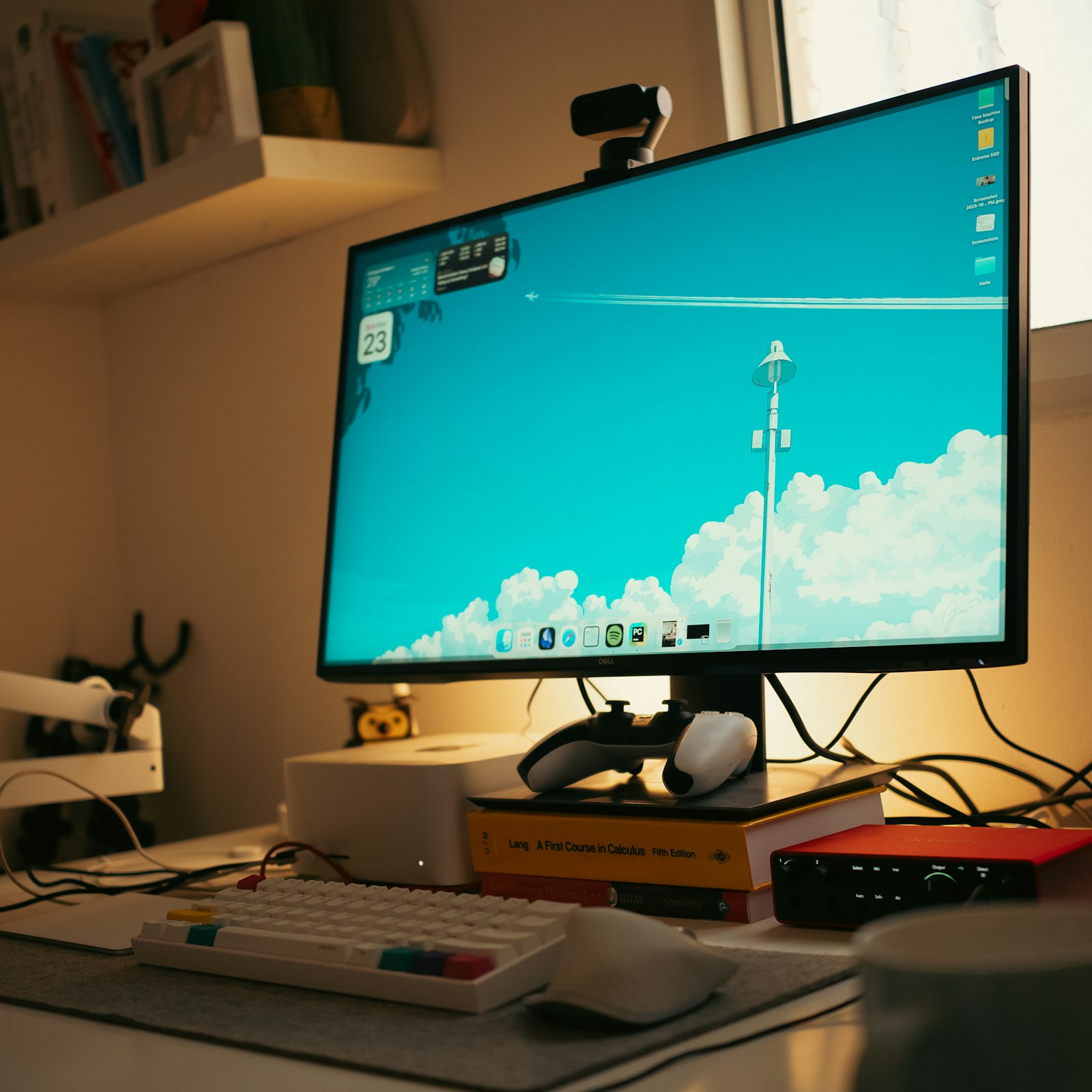
I resisted buying a second monitor for two years, certain that a small Kathmandu apartment desk simply didn't have room for one. What actually didn't have room was a second full-size monitor. A portable one, thin enough to lean against the wall when not in use, fit fine, and the difference in how much I could get done in a day was bigger than I expected from something that just shows more pixels.
What the Research Actually Credits
Studies on multi-monitor productivity consistently point to the same underlying cause: more usable screen real estate reduces the time spent switching between windows, alt-tabbing, and losing your place. That benefit comes from total screen space, not from the specific fact of having two separate physical displays. A single large ultrawide monitor gets you a similar gain to two smaller ones side by side, which matters because it means the "two screens" framing isn't actually the requirement, extra space is.
Why Portable Specifically Solves the Space Problem
A small desk can't fit a second full-size monitor and its stand without crowding out everything else. A portable monitor is thin, usually well under a kilogram, and stands on a slim folding case rather than a full monitor arm, so it occupies a fraction of the desk footprint. The tradeoff is real: portable monitors are usually dimmer and lower-contrast than a proper desktop display, since they're built to run off laptop USB-C power rather than a wall outlet, so they're a compromise on picture quality in exchange for fitting a space a normal monitor never would.
Who Actually Benefits
The gain is largest for anyone doing work that involves referencing one thing while working in another: a client brief next to a document, a spreadsheet next to email, a design reference next to the canvas. If your work is mostly a single full-screen application, video editing, for instance, a bigger single monitor usually serves you better than splitting attention across two smaller ones. The benefit isn't universal, it's specifically about reducing the tax of switching between things you need to see at the same time.
The Honest Verdict
A portable monitor is worth it if your desk genuinely can't fit a second full-size display and your work involves referencing multiple things at once. It's not worth it if you mostly work in one application at a time, or if you have the desk space for a proper second monitor instead, since picture quality takes a real hit for the sake of portability. Buy it for the space it saves, not because two screens are inherently better than one bigger one.